Brakes rarely fail without warning. Most of the time they make noise for weeks before anything serious happens. Here is what those sounds usually mean.
The sounds
- High-pitched squeal when braking: most pads have a small metal tab that squeals when they are worn to about 3 mm. Book a brake inspection soon.
- Grinding or growling: the pads are gone and metal is scraping metal. Stop driving if you can. Every mile damages the rotors.
- Squeal right after rain or a car wash: usually surface rust on the rotors. It should disappear after a few stops.
- Clunk when you first brake: often loose caliper hardware or worn suspension parts.
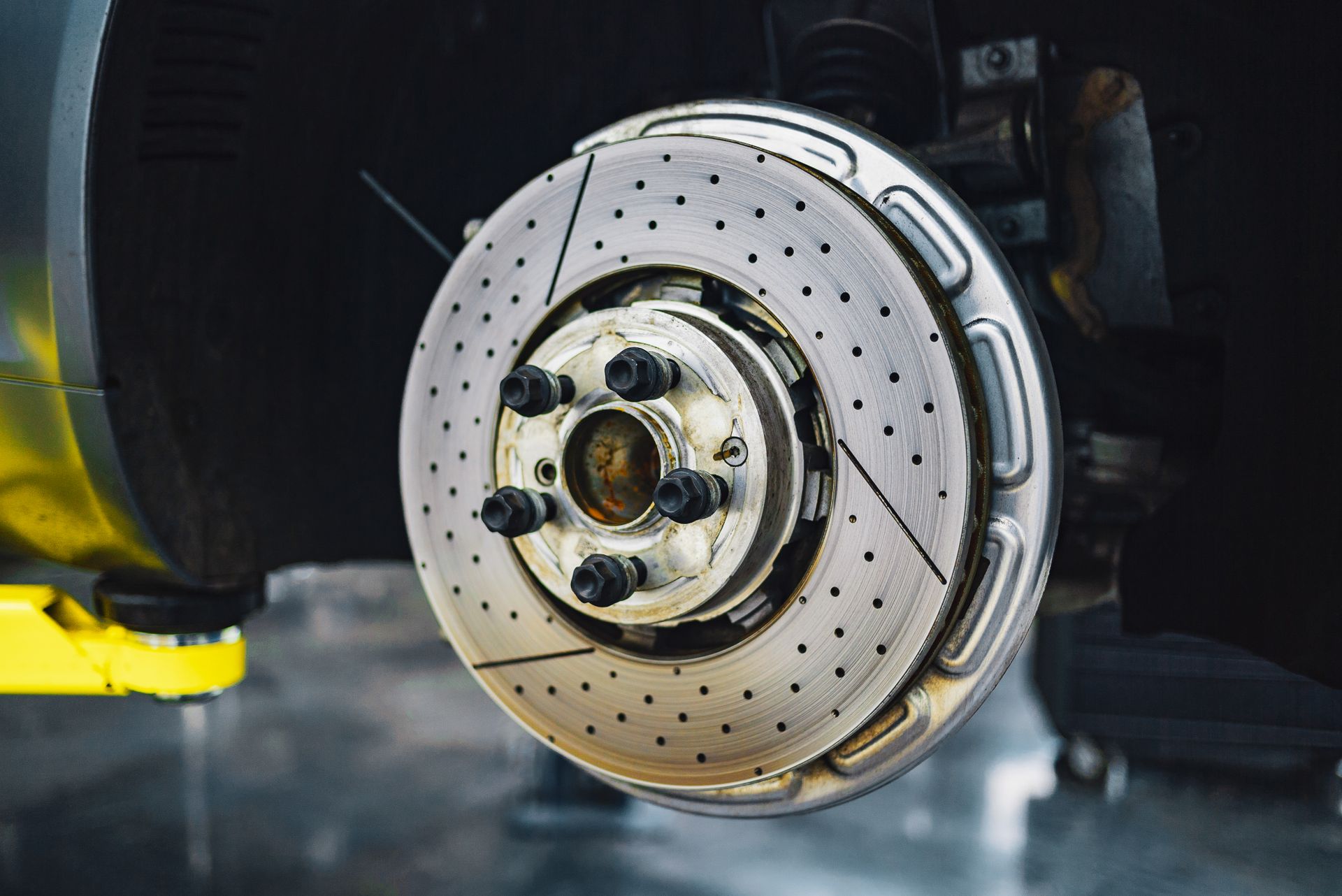
- Pulsing pedal or shaking steering wheel: rotors with uneven thickness, common after hard stops or overtightened wheels.
Do you really need new rotors?
Not always. We measure rotor thickness and runout on every brake job. If your rotors are within spec and not warped, we will tell you, and you will pay for pads only.
Don’t forget brake fluid
Brake fluid absorbs water over time, which lowers its boiling point and corrodes parts from the inside. Most manufacturers recommend replacing it every two to three years.
Every brake job includes a free inspection with measurements and photos. Pads carry a lifetime warranty.