Hail damage rarely announces itself. A roof can lose years of life in a ten-minute storm and still look fine from the driveway. Here is what our inspectors look for, starting with the clues you can check safely from the ground.
Clues you can spot from the ground
- Dented gutters and downspouts. Soft aluminum shows hail hits clearly. If gutters are dented, shingles were hit too.
- Dinged roof vents and flashing. Look for round dents on metal vents, chimney caps and satellite dishes.
- Granules at the bottom of downspouts. A pile of what looks like coarse black sand means shingles lost their protective coating.
- Damaged window screens and siding. Torn screens or chipped paint on the storm side of the house are a strong signal.
What we find on the roof
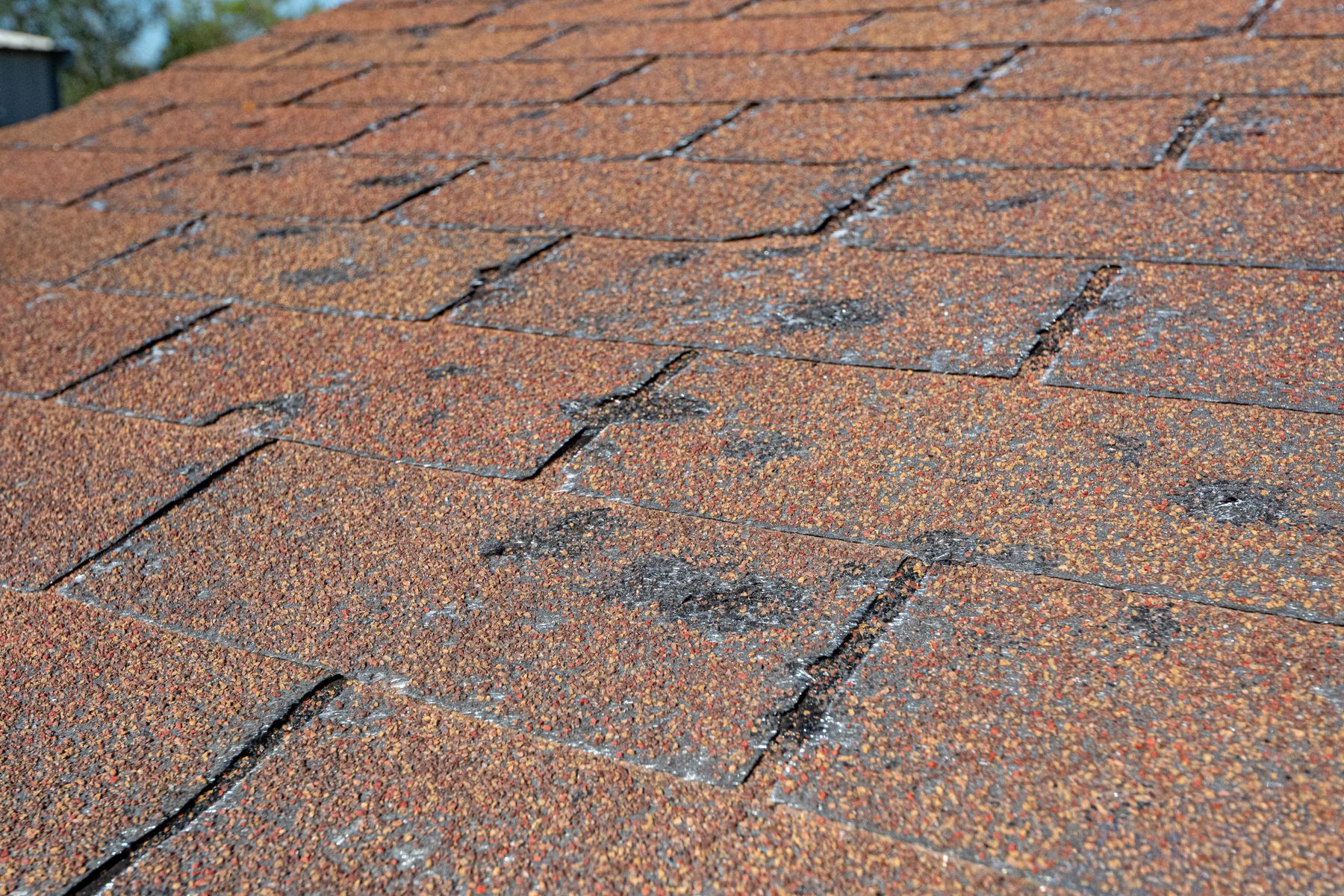
- Dark, bruise-like spots where granules were knocked away and the asphalt is exposed to sun.
- Soft spots that feel spongy when pressed, a sign the fiberglass mat underneath is fractured.
- Cracked or split shingles along the edges, especially on older 3-tab roofs.
Please do not climb onto a roof yourself after a storm. Wet shingles are slippery, and damaged ones can tear under your feet.
Why timing matters
Most Colorado policies require claims to be filed within one year of the storm, and some within six months. Exposed asphalt also ages quickly at 5,280 feet. A free inspection soon after the storm protects both your claim and your roof.
Peakline inspections include drone photos of every slope and a written report you can send straight to your insurer, whether or not you hire us.